


Protect Your Dog From Hidden Grass Seed Hazards This Summer

Summer means more time outdoors for dogs and their owners. Parks, fields, and footpaths become favorite spots for walks and play. But beneath the inviting green grass lies a hidden danger that many pet owners overlook: grass seeds. These tiny, sharp seeds can cause serious health problems for dogs if they get stuck in their skin, ears, eyes, nose, or paws.
Understanding the risks and knowing how to prevent grass seed injuries can save your dog from pain, infection, and costly vet visits. This post explains why grass seeds are dangerous, where they tend to get stuck, signs to watch for, and practical steps to protect your furry friend.
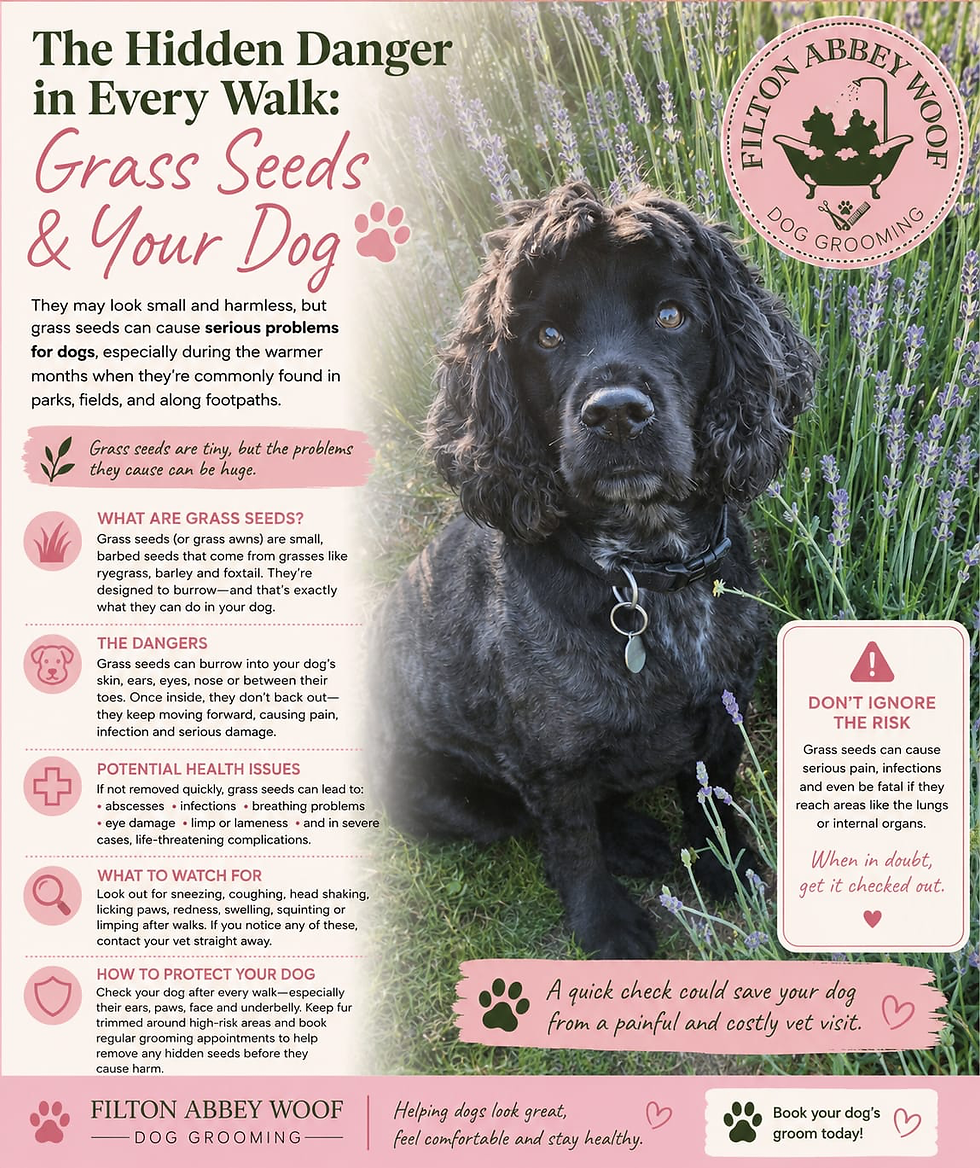
Why Grass Seeds Are a Hidden Danger
Grass seeds have evolved to burrow into the ground to sprout and grow. Their shape and tiny barbs help them latch onto fur and skin easily. Unfortunately, this natural design means they can also burrow into a dog’s body.
Once a grass seed enters the skin or a body cavity, it rarely comes back out on its own. Instead, it moves deeper, causing:
Pain and discomfort
Inflammation and swelling
Infections that may require antibiotics
Damage to sensitive areas like ears and eyes
Surgical removal in severe cases
Grass seeds are most common in the warmer months when grasses dry out and release seeds. Dogs running through long grass or fields are at high risk of picking up these seeds.
Common Areas Where Grass Seeds Get Stuck
Certain parts of a dog’s body are more vulnerable to grass seed injuries because of their shape or exposure during walks.
Between the Toes
The space between a dog’s toes is a favorite spot for grass seeds to lodge. The fur there traps seeds, and the skin is soft and sensitive. If your dog starts licking or chewing their paws, limping, or showing discomfort after a walk, check between the toes carefully.
Ears
Grass seeds can enter the ear canal, especially in dogs with floppy ears or lots of hair around the ears. Signs of a seed in the ear include:
Head shaking
Scratching at the ear
Redness or discharge
Odor or swelling
If untreated, seeds can cause painful infections or damage the ear canal.
Nose
Seeds can enter the nostrils during sniffing or running through grass. This often causes sudden sneezing fits or nasal discharge. Persistent sneezing after outdoor activity may indicate a seed stuck inside.
Eyes
Seeds near the eyes can cause redness, swelling, watering, and irritation. Dogs may paw at their eyes or squint. Because the eyes are delicate, prompt attention is important to prevent lasting damage.
Underbelly and Fur
Seeds can also get caught in the fur on the belly or other parts of the body, especially if the fur is long or thick. These seeds can cause skin irritation or infections if not removed.
Signs Your Dog May Have a Grass Seed Problem
Recognizing the symptoms early helps prevent serious complications. Watch for:
Excessive licking or chewing of paws or other body parts
Limping or favoring one leg
Frequent scratching or shaking of the head
Red, swollen, or watery eyes
Sneezing or nasal discharge
Unusual behavior such as restlessness or sensitivity to touch
If you notice any of these signs after outdoor activity, inspect your dog carefully or consult a veterinarian.
How to Prevent Grass Seed Injuries
Prevention is the best way to protect your dog from grass seed hazards. Here are practical steps to reduce the risk:
Check Your Dog After Every Walk
Make it a habit to examine your dog after walks, especially if you’ve been in grassy areas. Focus on:
Between the toes and paw pads
Inside and around the ears
Around the eyes and nose
Under the belly and along the legs
Removing any seeds you find early can stop them from causing problems.
Keep Fur Trimmed
Long fur traps grass seeds more easily. Regularly trimming the fur around your dog’s feet, ears, and belly reduces places where seeds can hide. If you’re unsure how to trim safely, a professional groomer can help.
Regular Grooming Appointments
Professional groomers often spot hidden grass seeds during grooming sessions. They can also keep your dog’s coat neat and easier to inspect at home.
What to Do If You Find a Grass Seed
If you spot a grass seed on your dog’s fur or skin, remove it carefully with tweezers. Be gentle to avoid pushing it deeper. If the seed is inside the ear, nose, or eye, or if your dog shows signs of pain or infection, seek veterinary care immediately.
Veterinarians can safely remove embedded seeds and treat any infections. Early treatment prevents complications and speeds recovery.
Grass seeds may be small, but their impact on your dog’s health can be significant. By staying vigilant, checking your dog regularly, and keeping their fur trimmed, you can protect them from this hidden summer hazard. A few minutes of care after each walk can save your dog from pain and vet bills later.


Comments